Perth County sits at an interesting crossroads in Southwestern Ontario. Stratford, St. Marys, and Listowel anchor compact urban markets with growing employment lands and revitalized cores. Outside those centres, townships like Perth East, North Perth, and West Perth hold a patchwork of farm parcels, highway corners, and contractor yards that serve the region’s industrial and agricultural economy. On paper, a rural 3 acre corner lot and an urban 1.2 acre infill parcel are both “commercial land,” but the forces that set their value diverge quickly.
As a commercial land appraiser working across Perth County, I have learned to respect those differences. The same techniques apply, yet the weightings and risk adjustments do not. Market evidence in Listowel or Stratford can be plentiful enough to support tight conclusions, while a rural site near Monkton, Rostock, or Mitchell might require more inference, more cost workups, and a careful read of planning policy. What follows is a field view of how I approach rural versus urban commercial land appraisal in this county, why certain adjustments matter, and how owners, lenders, and buyers can avoid costly surprises.
The ground truth: what actually sells, and at what tempo
Urban commercial land in Stratford, St. Marys, and Listowel changes hands with enough frequency to build a reasonable sales set in most years. Activity often clusters around employment land expansions, https://juliusdztv601.iamarrows.com/commercial-appraisal-services-in-perth-county-trends-and-best-practices-1 grocery-anchored nodes, and arterial corridors. Time on market typically runs three to nine months for competitively priced sites, faster if servicing is ready and zoning is a clean fit for intended use. Price ranges vary widely with location and permissions. In recent deals I have reviewed or verified, serviced urban employment land has traded in broad bands that can run from the mid six figures per acre to the low seven figures per acre in particularly strong nodes. Urban retail corner sites with high traffic and signalized access typically fetch a premium over interior parcels.
Rural commercial land is more episodic. Transactions tend to be bespoke: a contractor consolidating yard space, a farm diversifying into agri-service retail, or a transport company securing a highway tractor staging area. It is common to see longer marketing periods, often six to eighteen months. Price per acre ranges are wider and more sensitive to site work and servicing. A highway-exposed rural parcel with three phase power, good soil, and a drainage outlet can bring several times the price of a backlot with the same acreage. The buyer pool is smaller, which makes value more vulnerable to short-term supply and demand imbalances.
Even within towns, micro-markets behave differently. In Stratford, an infill site near the Festival Theatre area carries different fundamentals than a parcel on Lorne Avenue close to industrial users. In Listowel, retail-adjacent lands along Wallace Avenue North will not appraise like light industrial parcels tucked off Mitchell Road South. For commercial building appraisal Perth County owners who also hold land, that context matters: the residual land value under a building can diverge from the building’s income-driven worth, and the gap is rarely uniform across these micro-markets.
Highest and best use drives the bus
For commercial land, value follows highest and best use, legally permissible, physically possible, financially feasible, and maximally productive. In Perth County that test feels different when you cross the urban boundary.
Inside Stratford, St. Marys, and Listowel, intensification is often not just permitted, it is encouraged. If a 1.5 acre site can support 20,000 to 40,000 square feet of retail or service commercial, or if employment zoning allows mid-bay industrial with 28 foot clear heights, the land’s value is typically tied to that buildable envelope. For mixed use nodes or fringe-of-core parcels, an appraiser may also test a residual land value based on a hypothetical small-format grocery or medical office, capitalizing stabilized net operating income and backing out hard and soft costs. This income-residual approach acts as a check on the sales comparison method when transactions are thin.
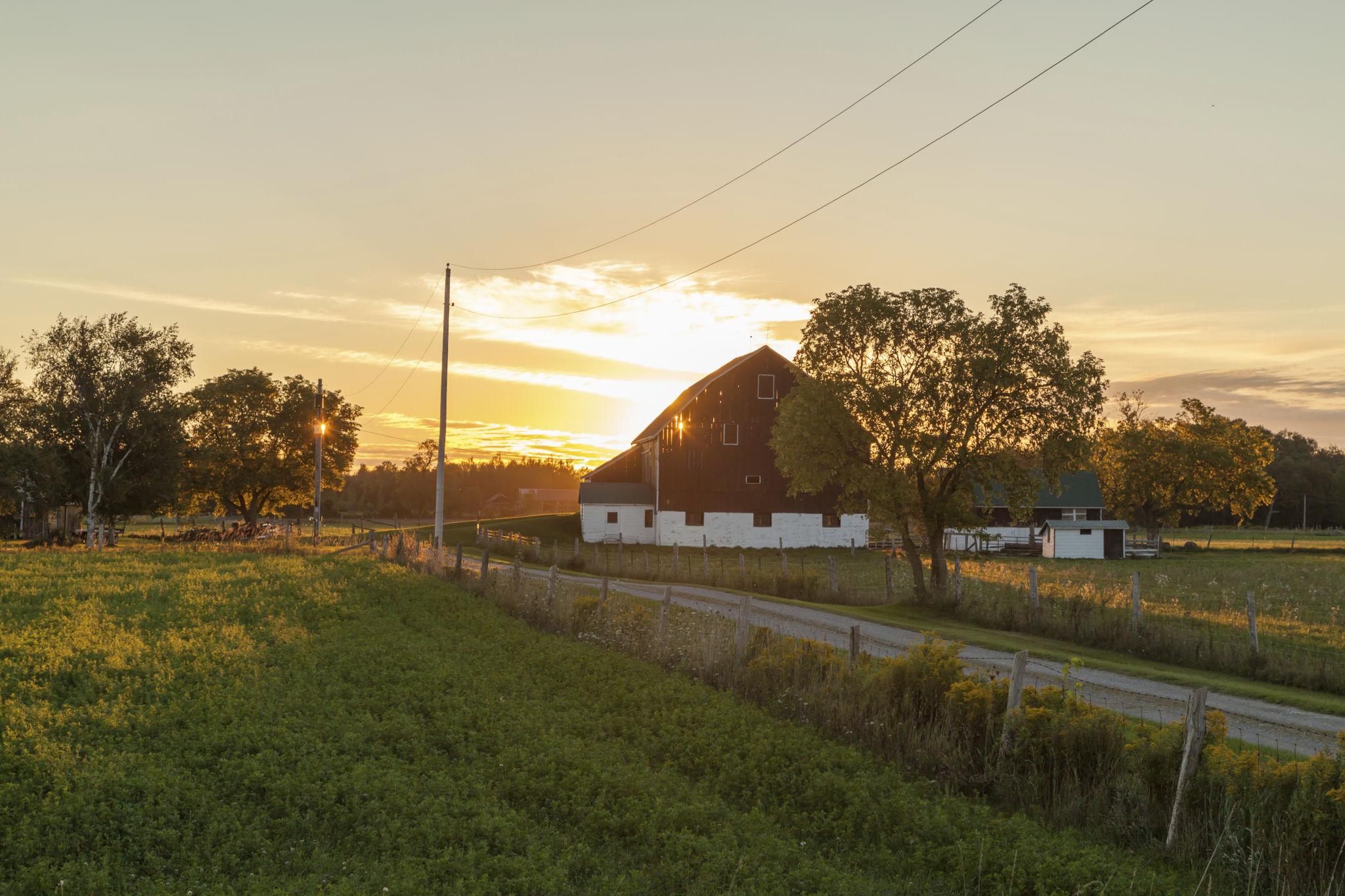
In rural townships, highest and best use is constrained by policy. Provincial and county planning frameworks protect prime agricultural land, and conversions to non-farm uses are not straightforward. Many rural commercial sites that do trade at market are already designated or zoned for highway commercial, rural industrial, or agricultural-related commercial uses. An appraiser cannot assume a more intensive or urban use simply because a bigger building could fit physically. The tested highest and best use might be a contractor’s yard with a 6,000 to 12,000 square foot shop, not a retail plaza, even if frontage and access look promising.
A practical example: a 2.8 acre rural corner west of Mitchell had solid traffic exposure and firm soils. But the site sat outside a settlement area, and the current zoning allowed farm equipment repair with limited retail display. Given policy constraints and the cost of bringing full municipal services was prohibitive, the feasible use topped out at a modest agri-service operation. The market reacted accordingly. Contrast that with a 1.1 acre urban parcel in Stratford with existing service laterals and arterial exposure. Even with a small building envelope due to a flood fringe, the ability to support 12,000 square feet of service commercial at urban rents placed a far higher residual on the land.
Servicing, utilities, and the invisible costs underfoot
Service status often swings rural versus urban values more than anything else. Buyers and lenders in Perth County focus on three things: water and wastewater, power, and drainage.
Urban parcels with municipal water and sanitary at the lot line command a premium because timing becomes predictable. Developers can submit for site plan, post securities, and build. Connection fees, development charges, and engineering are quantifiable. Subsurface surprises still happen, but overall cost certainty is better, and lenders are more comfortable leveraging those assets. For commercial property assessment Perth County stakeholders, that translates into cleaner capex models and tighter risk spreads.
Rural parcels lean on wells and private septic systems unless near a serviced hamlet. The cost and capacity of these systems depends on soil percolation rates, groundwater levels, and daily flows. A 20 employee shop with vehicle washing will size very differently than a parts showroom with light water use. Three phase power availability is another hinge point. A grain handling facility or light manufacturing shop might need 600 amps or more. Bringing three phase a few hundred metres can be manageable. Bringing it several kilometres can crater a pro forma. When I price rural land, I always speak with the utility early and document the upgrade path and estimated contribution costs.
Drainage can surprise both rural and urban buyers. Tile drainage maps are not always current. Rural swales freeze and heave in March. Urban infill sites hide relic foundations and fill pockets that require undercutting. On one Stratford infill parcel, we budgeted 80,000 dollars for excavation and base, then revised to 230,000 after probing found mixed fill down to 2.1 metres. That swing materially affected the land residual I supported in the appraisal. In rural settings, a simple ditch and culvert might look like a minor crossing until a conservation authority flags it as a regulated watercourse. Then the culvert replacement becomes a permitted structure with engineered design and seasonal timing windows.
Access, exposure, and the rules of the road
Commercial value rides on vehicles as much as people in Perth County. Traffic counts, turning movements, and MTO access controls all come up in appraisal work.
In urban nodes, a signalized corner can lift land value significantly if it permits safe truck egress for mid-bay industrial or clean right-in right-out for drive-through uses. Even on non-corner sites, spacing from intersections, proximity to bus stops, and pedestrian flow matter for specific users. Stratford’s core-adjacent blocks behave differently on weekdays during theatre season. Listowel’s retail strip has weekend spikes that shape tenant mixes and backfill assumptions.
Rural highways carry their own rules. An MTO permit may be required for new entrances on provincial highways or for changes in use that increase trips. Sight lines across knolls and ditches limit where a safe entrance can sit. Heavy truck traffic demands deeper granulars and wider radii at the driveway. If a site cannot achieve compliant access, the highest and best use might shift from a retail or fuel offering to a lower trip generator like a contractor yard. I have seen buyers walk away from rural highway corners once they ran the entrance geometry and realized they could not queue B-trains safely off the traveled lane.
Zoning, policy, and conservation authorities
Appraisers in the county spend real time on policy, not by choice but by necessity. Several regulatory bodies can affect commercial land value.
Municipal official plans and zoning bylaws set the land use frame. Amendments and rezonings are possible, yet not guaranteed, and timelines range from a few months for straightforward changes to more than a year for complex files. Site plan control applies to most urban commercial, with engineering requirements that add soft costs and securities. Development charges, parkland dedication, and frontage fees vary by municipality. In Stratford and St. Marys, charges for industrial uses are structured differently than for commercial or residential. Those fees can move a land residual by tens of dollars per square foot of building area. It is worth pulling the current fee schedules rather than relying on hearsay.
Conservation authorities overlay floodplains and regulate watercourses and wetlands. Depending on where the land sits, the Upper Thames River Conservation Authority or the Grand River Conservation Authority may have jurisdiction. A seemingly dry meadow can be part of a flood storage area or a spill zone. Filling or grading needs permits and engineered studies. I have appraised a St. Marys fringe parcel where the developable envelope shrank by almost 30 percent once the flood hazard line was confirmed, and the land value moved with it.
Provincial policy shields agricultural systems. Within Perth County’s strong farm belt, non-farm commercial uses in prime agricultural areas face a high test. Agricultural-related commercial can be viable, but general commercial is rarely permitted. Buyers who assume an easy path to commercial rezoning on a farm parcel will struggle. For commercial land appraisers Perth County wide, that policy landscape is not a footnote, it is a primary valuation input.
Environmental due diligence, from brownfields to barns
Urban infill often comes with environmental legacies. Phase I Environmental Site Assessments are standard. Former service stations, autobody shops, and dry cleaners can require Phase II testing and sometimes remediation. Stratford and Listowel have older commercial corridors where fill of unknown origin may have been placed decades ago. These risks do not automatically kill value, but they do lengthen timelines and increase carrying costs. An appraiser will either deduct expected remediation or risk-adjust capitalization where an income residual method is used.
Rural sites present a different profile. Agricultural chemical handling, historical fuel tanks near barns, and former dumps are not rare. The assumption that “it is just farm field” often proves false when aerials show a long-retired silo pad or a buried disposal pit. Wells and septic introduce ongoing liabilities if not properly decommissioned or designed. For insurance and lending, environmental documentation matters just as much as in town. The smartest buyers in rural Perth still order Phase I ESAs for commercial acquisitions, and lenders increasingly require them.
Market evidence and methodology: how we bridge gaps
Every appraisal relies on comparable data, but rural assignments can run lean on recent sales. When I cannot find perfect comps, I widen the geography, then tighten with adjustments for policy, servicing, and use. I also reach for cost and income tools to cross-check.
Sales comparison anchors most land value opinions. Adjustments typically address time, location, size, zoning and permissions, service status, and site work. If a Stratford serviced industrial sale at, say, a certain dollar value per acre is my best comp, I will not port that rate unadjusted to a Mitchell rural parcel without services. The location and service deductions can be material, and the highest and best use divergence may require a further step-down.
Income residual analysis can be persuasive for urban land slated for build-to-suit or multi-tenant commercial. I will model a stabilized net rent profile that reflects local leasing. For mid-bay industrial in Stratford or Listowel, net rents often bracket a range that supports simple arithmetic on buildable area after accounting for yard and parking. Capitalization rates for modern industrial in these submarkets have sat within a fairly narrow band in recent years, but tenant quality, clear height, and loading influence the final rate. From stabilized value, I deduct hard costs, soft costs, financing and leasing costs, and a developer profit to isolate a residual land value. This method is less common for rural highway commercial, but it can help with single-tenant uses when a ground lease is contemplated.
Cost-to-service analysis is crucial for rural. I prepare line items for well and septic, hydro upgrades, entrance construction, site grading and granulars, stormwater management, and any off-site works. These inputs allow me to reconcile a raw land price with an “as improved and serviced” benchmark by deducting unavoidable works. Buyers and lenders respond well to this approach because it mirrors their own budgeting.
Case notes from the field
Two quick sketches show how these elements play out.
A Stratford infill, 1.3 acres, former light industrial use, fully serviced. The buyer targeted a two-tenant service commercial build of about 16,000 square feet. Phase I ESA flagged historical fill, and test pits found deleterious material. The development team priced removal and replacement. Current municipal fee schedules and site plan securities were pulled early. My appraisal used both sales comparison and a residual method tied to local net rents. The residual seconded the sales approach within a tight margin after I factored the unexpected fill costs and a modest premium for signalized access. The land supported senior debt comfortably, and the transaction closed.
A rural corner near a provincial highway, 2.4 acres, no municipal services. Zoning allowed agricultural-related commercial. Three phase hydro was one kilometre away. The proposed use, a parts and repair shop with modest retail, matched permissions. The hydro extension cost share and the engineered entrance consumed more budget than the buyer expected. Sales were thin, so I reached into nearby counties for rural highway comps and adjusted back for Perth County conditions. I layered a cost-to-service deduction to create an apples-to-apples comparison with a better-serviced rural comp. The reconciled value fell below the initial asking price, and eventually the vendor met the market.
Rural risk checklist for commercial land in Perth County
- Confirm zoning permissions in writing and read the official plan policies on non-farm uses. Price out services early: well yield testing, septic sizing, and three phase hydro extension costs. Walk the access geometry with an engineer if heavy trucks will use the entrance, then consult MTO if applicable. Order a Phase I ESA even if the site looks like clean farm field, and review historical aerials. Identify conservation authority jurisdiction and verify flood lines or regulated features.
Urban infill checklist before you bid
- Pull servicing maps and confirm lateral sizes, pipe depths, and any frontage or oversizing charges. Verify development charges and parkland or cash-in-lieu obligations using current municipal schedules. Probe subsurface conditions where fill is suspected and budget for undercutting and engineered base. Map access and traffic movements, including queuing and drive-through stacking if relevant. Run an income residual cross-check against local net rents and realistic cap rates to test price discipline.
Timing, carrying, and the value of patience
Time is money in both settings, but it behaves differently. In town, site plan approval, building permit, and utility coordination can still stretch nine to fifteen months for a mid-size commercial build, with tender cycles and seasonal constraints. Carrying land at urban price points requires firm capital and clear milestones. Rural approvals might involved less site plan rigor, but hydro extensions, entrance permits, and septic approvals can line up in series rather than parallel. Winter restrictions on entrance construction or culvert work can push a closing or break ground date. When I apply a developer’s profit in a residual model, I adjust not only for risk but for the timeline to revenue. A three month delay on a 2 million dollar construction draw at current interest rates is not an abstract footnote, it is a real hit to equity.
Taxes, HST, and assessment nuances
HST treatment on land sales depends on vendor and purchaser status and the nature of the property. Many commercial land transactions involve HST on top of the purchase price, although elections and rebates can apply. Land transfer tax, legal fees, and due diligence costs should be acknowledged in the buyer’s total basis. On the back end, commercial property assessment Perth County assessments through MPAC will reflect the use and improvements. Land banking without development can reduce carrying costs in the short term, but municipal tax classifications change once site work or buildings commence. Savvy investors underwrite the full tax load post-development when testing land affordability.
Edges and trade-offs you do not see on a spec sheet
Not every premium is obvious. In towns with older grid networks, certain parcels benefit from redundant access or rear lanes that improve circulation and fire access, which in turn reduce site plan headaches. Proximity to rail may help specific industrial users even if spur access is not in play. In rural settings, soils that support heavy vehicle loads without extensive stabilization are worth more to transport and aggregate users than to an office or retail user who will never test that capacity.
Noise and odour drift from agricultural operations can change the tenant mix a site can attract. A shiny rural retail concept might work on paper until the spring manure window arrives. Conversely, a rural contractor yard that generates noise in early mornings may never fly on a Stratford collector street abutting established residential.
I have also seen wind turbine setback lines, pipeline easements, and fiber trunk corridors carve unexpected no-build zones into seemingly open land. Title searches and survey work pay for themselves. For urban infill, heritage overlays or urban design guidelines can change massing and parking layouts, trimming buildable area just enough to shift value.
Where commercial building appraisal meets land value
Owners sometimes ask how land value interacts with a commercial building appraisal Perth County wide. If a building’s income does not support the residual land value that the market assigns to a redevelopment site, friction appears. In Stratford’s core-adjacent areas, an older single-storey retail may appraise on income at one figure while its land, if cleared and re-entitled, is worth more. Lenders pay attention to this “under-improvement” dynamic because it can influence refinance and exit risk. Commercial building appraisers Perth County practitioners often run a land check when improvements are nearing the end of economic life, especially on corner sites with clear intensification potential.
Working with appraisers and picking the right partner
Not all commercial appraisal companies Perth County teams share the same data depth or local relationships. Engage firms that actively verify sales, speak with planners and utility reps, and are willing to walk the site with a contractor’s eye. A desk-only view misses the entrance grade that will trap trucks or the shallow rock that will multiply footing costs. The best appraisals read like they were written by someone who has built or financed the exact use you intend, because methodology only gets you halfway. Realistic inputs and grounded judgment do the rest.
When you brief an appraiser, bring more than a pin on a map. Provide any prior ESA reports, servicing drawings, pre-consultation notes with the municipality, and rough building programs. If a national tenant has issued an LOI with rent and term, share it. These items narrow ranges and reduce guesswork. You still get an independent opinion, but one based on the facts particular to your site, not a generic template.
A final word on price discipline
Perth County remains a place where deal terms move when diligence reveals a hidden cost or a tighter permission. That is not a sign to flee, it is a cue to approach both rural and urban sites with price discipline grounded in actual constraints. A thoughtfully prepared appraisal helps you do that. It will not chase the highest possible number. It will chase the number that survives contact with zoning, soils, services, and time.
Whether you are eyeing a Stratford infill with municipal services and theatre season foot traffic, or a rural highway corner suited to agri-service and contractor yards, the principles are the same even if the weights differ. Test highest and best use honestly. Count every metre of pipe and every truck turning movement. Adjust for policy, not hope. If you do that work upfront, the land will tell you what it is worth, and lenders will nod rather than frown when they read your file.